
If you’ve ever scrolled through Instagram garden posts and thought, “I wish my tiny backyard could look like that,” you’re absolutely not alone. Square foot gardening is the go-to strategy for anyone wanting to grow a productive, organized, low-maintenance garden—no acre of land required. And trust me, once you create your first square foot gardening plan, you’ll wonder how you ever gardened any other way.
I’ve been using square foot gardening methods for years now—both in raised beds and even in makeshift balcony boxes—and every season feels like a fun real-life puzzle. What can I plant next to what? How do I fit more? And why does this system make everything look so clean and intentional? Whether you’re totally new to gardening or looking to improve your existing setup, I’m here to walk you through it like we’re chatting over coffee in the backyard.
Oh, and if you’re into creative garden-related doodles, you’ll find Flower House Coloring Page Ideas surprisingly helpful for visualizing your layout. Funny how hobbies overlap, right?
Let’s dive in.
What Is Square Foot Gardening, Exactly?

Before we get to the full plans, let’s start with the basics. Square foot gardening (often called SFG) is a method where you divide your garden bed into 1-foot x 1-foot squares and plant a specific number of plants per square based on spacing needs. Simple, right?
The idea is to maximize space, reduce waste, and streamline your garden layout. Instead of long, hard-to-manage rows, you get tidy little squares where every inch matters.
Why Gardeners Love This Method
- Low maintenance once established
- Beginner-friendly—no need to guess spacing
- Efficient use of soil and water
- Perfect for small spaces, patios, and raised beds
- Highly customizable
Pretty appealing, right?
How to Start Your Square Foot Garden Plan (Step-by-Step)

This is the blueprint I wish I had when I started. Think of this as your personal roadmap.
1. Choose the Right Bed Size
Most gardeners go with the classic 4×4 foot raised bed, which gives you sixteen 1-foot squares to work with. It’s easy to reach from all sides, making it perfect for beginners.
Other Popular Bed Sizes
- 4×8 ft: Great if you want more variety
- 3×3 ft: Perfect for small patios
- 2×8 ft: Ideal for narrow spaces or walkways
FYI, you can do SFG in containers, too, as long as you divide the surface into squares.
2. Create the Square Grid
This part always feels like the “crafting” step. You can use:
- Wooden slats
- String or twine
- Bamboo strips
- Plastic garden dividers
Just make sure each square measures 12 x 12 inches. Accuracy matters.
3. Prepare the Soil Mix
The traditional square foot gardening mix includes:
- 1/3 peat moss (or coco coir)
- 1/3 compost
- 1/3 coarse vermiculite
This creates loose, nutrient-rich soil with excellent drainage. IMO, it’s one of the reasons plants thrive so quickly.
4. Decide What Goes in Each Square
This is the fun puzzle part. Each crop has a recommended number of plants per square:
Spacing Suggestions
- 1 per square: Broccoli, cauliflower, cabbage, peppers
- 2 per square: Cucumbers (trained vertically)
- 4 per square: Lettuce, basil
- 9 per square: Bush beans, spinach
- 16 per square: Radishes, green onions
Sounds organized because it is.
Square Foot Gardening Plans You Can Use Today

Below are several plan variations depending on your gardening goals. Whether you’re growing veggies, herbs, flowers, or a mix, you’ll find something that suits your vibe.
1. Beginner-Friendly 4×4 Vegetable Plan
If this is your first attempt, try this balanced layout that gives you a variety of salad greens, root veggies, herbs, and a couple of larger plants.
Layout Example
- Row 1: Lettuce, lettuce, spinach, radish
- Row 2: Carrots, carrots, bush beans, bush beans
- Row 3: Tomato (1 plant), basil (4 plants), peppers (1 plant), onions (16 plants)
- Row 4: Kale, chard, lettuce mix, marigolds
Why marigolds? They’re natural pest repellents and add some color. Plus, they look cute next to greens.
2. Herb-Lovers Square Foot Garden Plan
Herbs are some of the easiest plants to manage in SFG because they don’t require much space.
Herb Plan Layout (4×4)
- 4 squares: Basil
- 2 squares: Thyme (4 per square)
- 2 squares: Sage (1 per square)
- 2 squares: Rosemary
- 2 squares: Mint (strongly recommend a container)
- 4 squares: Parsley
- 1 square: Chives
- 1 square: Marigold or lavender for pollinators
If you love cooking, this is like having your own mini grocery store outside.
3. Flower + Veggie Companion Plan
Now we’re getting creative. Mixing flowers and vegetables isn’t just gorgeous—it boosts pollination and pest control.
Layout Idea
- Flowers: Marigold, calendula, nasturtium
- Veggies: Tomatoes, peppers, lettuce, carrots, beans
- Herbs: Basil, chive, dill
A plan like this is perfect for gardeners who also enjoy decorative elements—or who enjoy sketching garden layouts and want inspiration for Flower House Coloring Page Ideas.
4. Vertical Square Foot Gardening Plan
Short on space? Go vertical. You can trellis:
- Tomatoes
- Pole beans
- Peas
- Cucumbers
- Melons (small varieties)
Put these along the back row of your layout so they don’t shade lower plants.
A Real-World Example: My Early Spring Layout
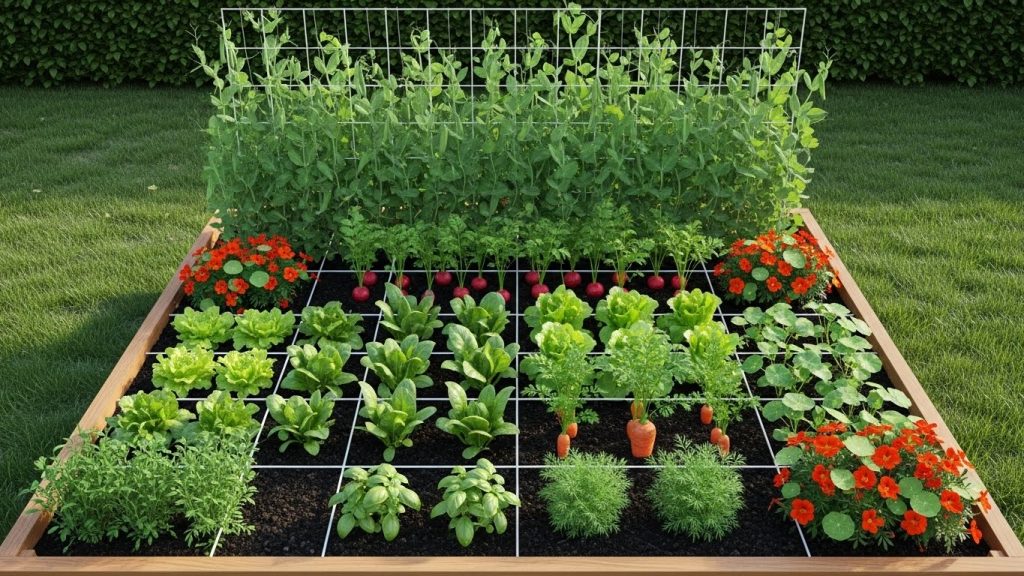
Here’s a plan I used last year that absolutely exploded with produce:
My 4×8 Spring Plan
- Back row: Peas (8 squares) on a net trellis
- Middle rows: Lettuce, spinach, radishes, carrots
- Front row: Herbs like basil, dill, parsley
- Corners: Nasturtium and marigolds
I harvested salads almost daily—and honestly, seeing everything grow in perfect little squares is kinda satisfying, right? : )
Extra Tips for Successful Square Foot Gardening

Want to level up? These simple tweaks go a long way.
1. Use Vertical Space
A-frame trellises, cattle panels, and simple stakes can dramatically increase yields.
2. Succession Planting Is Your Best Friend
As soon as you harvest radishes or lettuce, plant something new. Your garden stays productive for months.
3. Mix Flowers and Veggies
Companion flowers like marigolds, calendula, and lavender keep bugs away and attract bees.
4. Water Consistently
SFG beds dry out faster because they have loose soil. Try using:
- Drip lines
- Soaker hoses
- Mulch for moisture retention
5. Track Your Layouts
You can keep notes, sketch layouts, or even create printable grids inspired by Flower House Coloring Page Ideas.
Benefits of Square Foot Gardening

Let’s bullet-point this for clarity:
- Simple garden planning
- Efficient spacing and higher yields
- Minimal weeding
- Beginner-friendly organization
- Attractive, tidy appearance
- Great for kids and small spaces
- Reduces soil waste and fertilizer needs
If you like clean, organized systems in your life, this method will feel incredibly natural.
20 Frequently Asked Questions (FAQs)
1. What is a square foot garden?
A method of gardening that divides beds into 1-foot squares for organized planting.
2. Do I need a raised bed for square foot gardening?
No, but raised beds make measuring and maintenance easier.
3. How deep should the soil be?
Most plants do well in 6–12 inches of soil.
4. Can I use regular garden soil?
It’s not ideal; the classic SFG mix provides better drainage and nutrients.
5. How many tomatoes per square foot?
Only one, and ideally next to a trellis.
6. Is SFG good for beginners?
Absolutely—it’s one of the easiest gardening systems to learn.
7. Can I grow flowers in a square foot garden?
Yes, and they help with pests and pollinators.
8. What plants should not be planted together?
Avoid mixing heavy feeders—like tomatoes and squash—too closely.
9. Do I need fertilizer?
Add compost regularly; that’s often enough.
10. How often should I water?
Daily in hot weather, less during cooler seasons.
Conclusion: Ready to Build Your Own Square Foot Garden?
Square foot gardening isn’t just efficient—it’s fun, flexible, and surprisingly artistic. Once you lay out those little squares and start plugging plants into place, you’ll feel like your garden became a living puzzle that grows greener every week. Whether you’re planning a veggie patch, a herb haven, or even a flower-veggie hybrid inspired by your favorite coloring pages, this method gives you incredible creative freedom.