When I first stumbled across hydroponics, I thought it was some complicated science project for labs or commercial growers. But after building my first DIY system (a plastic tote, an air pump, and a few seedlings), I was hooked. The results blew me away—plants grew faster, healthier, and cleaner than in my outdoor soil garden.
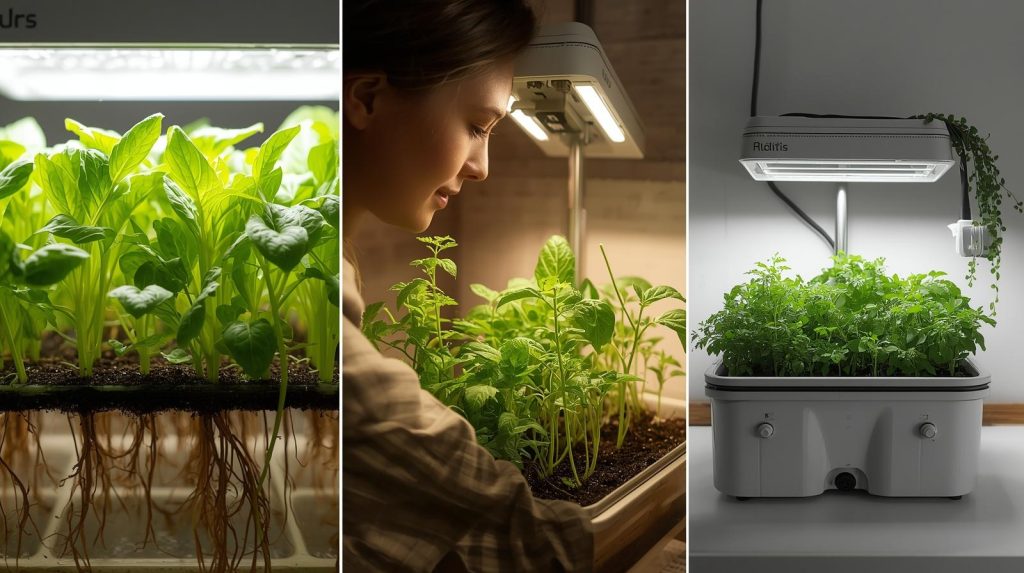
If you’ve been curious about how to start your own hydroponic gardening DIY project, stick with me. I’ll walk you through the basics in plain English, so by the end of this guide, you’ll feel ready to grow your own soil-free indoor jungle.
What Exactly is Hydroponic Gardening?
At its core, hydroponics means growing plants without soil. Instead, roots live in water enriched with nutrients, oxygen, and light—everything they need to thrive.
Why Ditch Soil?
- Direct nutrition: Plants absorb nutrients faster.
- Space efficiency: Great for apartments and small homes.
- Less mess: No mud, no weeds, fewer pests.
- Water savings: Uses up to 90% less water compared to traditional gardening.
It’s like giving your plants a VIP pass to nutrients and light without making them dig through dirt. Pretty cool, right?
Why Hydroponic Gardening is Perfect for Beginners
Some folks think you need to be an expert or drop a fortune to start. Not true! Here’s why hydroponics is beginner-friendly:
- Simple setups: A bucket and air pump can get you started.
- Fast results: Many plants grow quicker than in soil.
- Affordable DIY options: You can build your own system for under $50.
- Scalable: Start with one plant, expand as you learn.
So if you’re new to gardening, hydroponic gardening DIY might actually be easier than wrangling with outdoor soil beds.
Different Types of Hydroponic Systems
Before you start drilling holes in buckets, let’s break down your options.
Deep Water Culture (DWC)
- Roots dangle in nutrient-rich water.
- Air pump keeps water oxygenated.
- Best choice for beginners.
Wick System
- Uses a wick to pull nutrients to plant roots.
- No pumps, no electricity.
- Great for herbs and small greens.
Nutrient Film Technique (NFT)
- Thin film of water runs through channels, feeding roots.
- Efficient but requires constant flow.
Ebb and Flow (Flood and Drain)
- Tray floods with nutrients, then drains.
- Supports larger plants but needs more parts.
Aeroponics
- Roots hang in the air, misted with nutrients.
- Super efficient but high-maintenance.
- IMO, beginners should start with DWC or Wick systems. They’re low-cost, simple, and foolproof.
What You’ll Need to Get Started
Here’s your shopping list for a small hydroponic gardening DIY system:
- 5–10 gallon container or bucket (dark-colored, to block light).
- Net pots (to hold seedlings).
- Growing medium (clay pebbles, rockwool, or perlite).
- Air pump + air stone (keeps water oxygenated).
- Hydroponic nutrients (pre-mixed or DIY blends).
- pH kit (to keep water balanced between 5.5–6.5).
- LED grow lights (if you’re indoors without strong natural light).
Optional but handy:
- Timer (for lights).
- Small fan (to prevent mold).
Step-by-Step: Building Your First Hydroponic System
Alright, here’s where it gets exciting!
Step 1: Prep the Container
Drill holes in the lid for net pots. Make sure each hole fits snugly.
Step 2: Add Air Pump
Place the air stone at the bottom, connect it to your pump, and plug it in. Bubbles = oxygen = happy roots.
Step 3: Mix Nutrients
Fill the container with water, add nutrients per the label, and test pH. Adjust to the sweet spot of 5.5–6.5.
Step 4: Add Seedlings
Place your seedlings in net pots with growing medium. Roots should touch or hover near the water.
Step 5: Light It Up
Set LED grow lights 12–18 inches above plants. Adjust height as they grow taller.
Congrats! You’ve just built a simple hydroponic gardening DIY system at home .
Best Plants for Beginners
Not every plant is hydro-friendly, but plenty thrive. Start with these:
- Leafy greens: Lettuce, kale, spinach, bok choy.
- Herbs: Basil, mint, cilantro, parsley.
- Fruiting plants: Cherry tomatoes, peppers, strawberries.
- Quick growers: Arugula, mustard greens, green onions.
FYI: Leafy greens are the easiest. They grow quickly and give you a confidence boost.
The Big Three: Light, Water, and Nutrients
Lighting
- Leafy greens: 14–16 hours/day.
- Fruiting crops: 12–14 hours/day.
- Use a timer to avoid forgetting.
Water & Nutrients
- Change nutrient solution every 2 weeks.
- Watch for mineral buildup.
- Keep roots submerged but oxygenated.
Airflow
- A small fan prevents mold.
- Air circulation also strengthens stems.
Common Mistakes Beginners Make
Let’s save you some headaches. Here’s what to avoid:
- Overfeeding nutrients: More is not better. Stick to instructions.
- Ignoring pH: Out-of-range pH = nutrient lockout.
- Poor lighting: Weak light = slow, leggy plants.
- Skipping aeration: Without oxygen, roots suffocate.
- Starting with hard crops: Don’t begin with big root veggies like carrots or potatoes.
Remember: mistakes aren’t failures—they’re just lessons in disguise.
My First Hydroponics Journey
I’ll be honest: when I built my first setup, I didn’t know what I was doing. I used a cheap plastic tote, a pump from an aquarium kit, and some lettuce seedlings. I half-expected everything to die.
But two weeks later, I had baby lettuce leaves ready to harvest. The speed was insane compared to my outdoor garden. That moment sold me on hydroponics forever. Now, I’ve expanded to herbs, tomatoes, and even strawberries indoors. My friends joke I’ve got a “mini salad factory” in the corner of my apartment .
Why You Should Try Hydroponics Today
Here’s the deal:
- It’s easy. Start with a small DWC system.
- It’s affordable. DIY setups can be done on a budget.
- It’s fun. Watching roots grow in water feels like magic.
- It’s rewarding. Fresh food at your fingertips, year-round.
Whether you’re a beginner or a curious DIY-er, hydroponics is one of the most satisfying hobbies you’ll ever pick up.
Conclusion
So, there you have it: your ultimate guide to hydroponic gardening for beginners.
Let’s recap quickly:
- Hydroponics = growing plants in water, no soil needed.
- Start simple with Deep Water Culture or Wick systems.
- Gather basic supplies: container, air pump, nutrients, and lights.
- Best starter crops? Leafy greens and herbs.
- Avoid common mistakes like bad pH, overfeeding, or weak lighting.